Note: I originally wrote some of this in a reply to an excellent post by Gabriel Friedlander (I recommend you follow him)
When we think of cyberattacks like denial-of-service (DoS) attacks, we picture sophisticated malicious actors, cutting-edge technology, and massive disruptions. But did you know that the concept of a DoS attack can be traced back to the early 1800s during the Industrial Revolution?
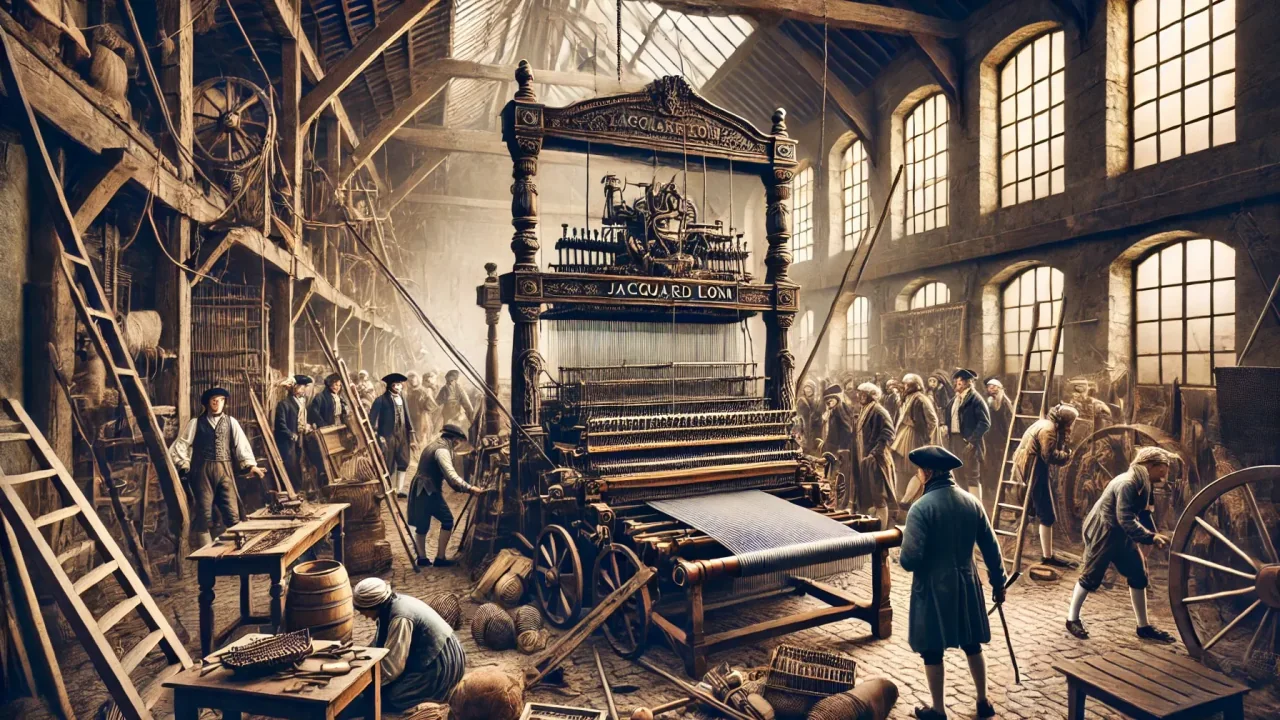
It all started in France, where workers protested the rise of mechanization and automation in their industries. One target of their frustration was the Jacquard loom, an ingenious invention that revolutionized weaving by automating complex patterns through punch cards. These looms are often considered the first programmable mechanical devices—a precursor to modern computers.
While revolutionary in design, the Jacquard loom threatened the livelihoods of skilled weavers, leading to widespread resentment. In acts of rebellion, these workers sabotaged workshops operating the looms, effectively halting production. These actions were among the earliest examples of resistance to technological disruption. Interestingly, the word sabotage is thought to derive from this period, potentially originating from throwing wooden clogs, or sabots, into the machines to damage them (N.B. there is some debate whether this is the true origin of the word "Sabotage").
I've always been fascinated by the origins of expressions like sabotage because they connect us to pivotal moments in history. They remind us that the challenges and fears we associate with progress aren't new—they've shaped our world for centuries.
This story also has striking parallels to our present-day AI revolution. Just as the Jacquard loom transformed the textile industry, AI is changing everything from manufacturing to healthcare to creative industries. And just as workers of the Industrial Revolution grappled with the societal and economic shifts brought on by automation, we're facing similar debates today about job displacement, the ethics of AI, and the future of work.
What can we learn from history? For one, resistance to technological progress is often the fear of the unknown. But it also reminds us of the importance of balancing innovation with compassion. How do we ensure that technological advancements empower rather than alienate? How do we use them to elevate society as a whole?
I'd love to hear your thoughts. How do you see the lessons of the past informing our approach to the AI revolution?
References:
- Essinger, J. (2004). Jacquard's Web: How a Hand Loom Led to the Birth of the Information Age. Oxford University Press.
- Cortada, J. W. (2012). The Digital Flood: The Diffusion of Information Technology Across the U.S., Europe, and Asia. Oxford University Press.
- "Industrial Revolution and the Luddites." The British Library. Available at: www.bl.uk